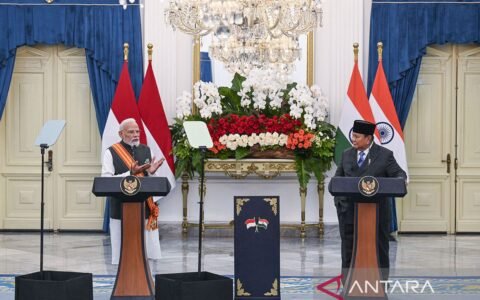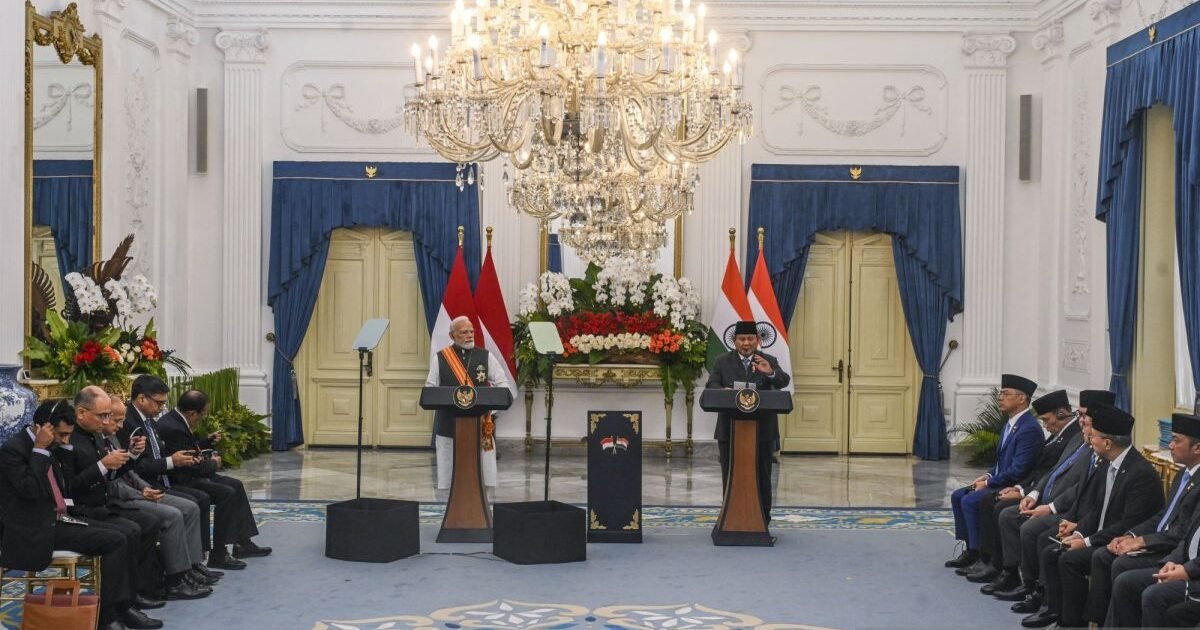
India’s defence-export story reached a new milestone on July 7, when Indonesia’s Ministry of Defence and BrahMos Aerospace signed a contract for the supply of BrahMos supersonic cruise missiles during Prime Minister Narendra Modi’s state visit to Jakarta. The agreement caps nearly eight years of on-and-off negotiations and makes Indonesia the third foreign customer for the missile after the Philippines and Vietnam.
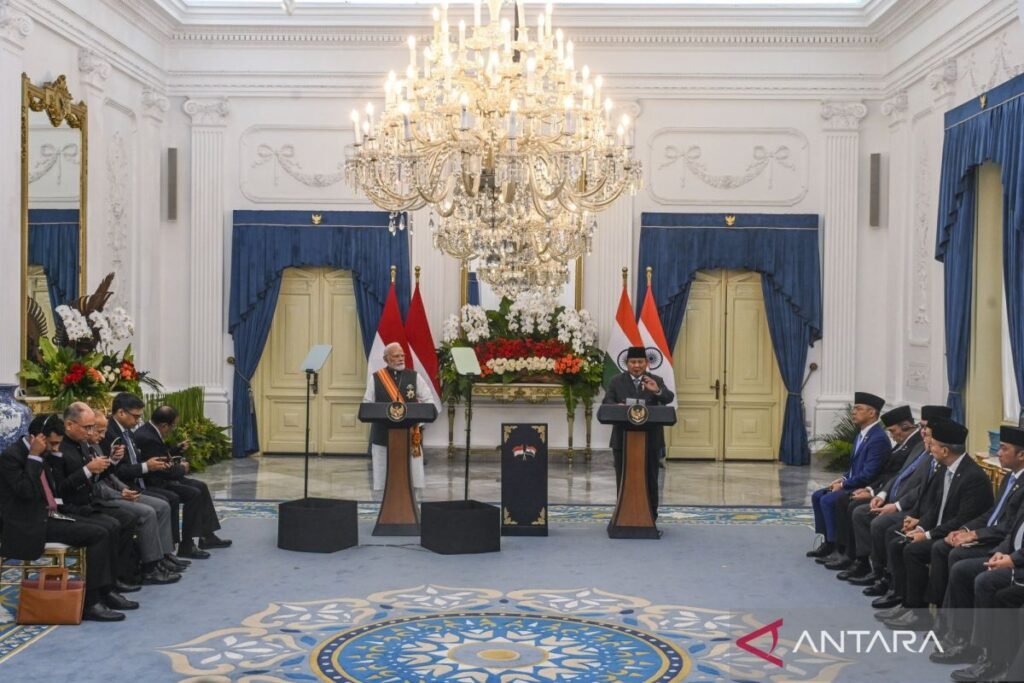
Neither government disclosed commercial terms. But Indian government sources told Reuters the package is worth around $630 million (roughly Rs 5,985 crore), a figure reported by Business Today and widely carried across Indian media; some outlets reported Jakarta had expanded an earlier, smaller order into a larger multi-battery purchase. The contract is understood to cover the missile system, supporting infrastructure, training and maintenance.
What the Missile Brings
The BrahMos, produced by a joint venture between India’s DRDO and Russia’s NPO Mashinostroyeniya, flies at up to three times the speed of sound and can be launched from land, ships, submarines and aircraft. Its velocity makes interception extremely difficult — a quality that matters enormously for a nation of some 17,000 islands guarding several of the world’s busiest maritime chokepoints. The export variant is capped at a range of around 290 km in line with Missile Technology Control Regime norms, orienting it toward coastal defence rather than long-range strike.
Why Indonesia Wants It
For Jakarta, the missile offers potent anti-ship and coastal-defence capability at a time of rising friction around the South China Sea. Ahead of the visit, India’s Ambassador to Indonesia, Sandeep Chakravorty, said talks had reached a very advanced stage, telling IANS: “There have been discussions which are at an advanced stage. And we hope that very soon these discussions will materialise and there will be movement of defence equipment from India into Indonesia,” as reported by IANS. At the joint press statement, Prabowo tied the purchase to a wider security agenda: “As the challenges of transnational security issues increase, we are committed to deepening capacity development in new technologies, combating transnational crime, and developing digital infrastructure,” he said, in remarks carried by ANTARA.
The purchase also fits a long-documented Indonesian instinct to hedge. A recent International Institute for Strategic Studies study counted 87 defence and security agreements Jakarta has signed with 36 countries over 25 years — a portfolio approach that lets it buy Indian missiles without tilting decisively toward any single power.
Indian officials were careful to frame the missile as one strand of a broader industrial relationship rather than a standalone arms sale. Briefing reporters after the summit, an official identified in coverage as Tandon described the logic of keeping the commercial terms separate from the leaders’ talks: “BrahMos was discussed. It is an important part of the industry-to-industry collaboration that we are trying to develop, taking our defence cooperation relationship to the next level,” the official said, adding that pricing was left for the companies to settle, as reported by DD News.
Why It Matters for India
For New Delhi, the deal is the clearest sign yet that defence self-reliance is being reframed as an export proposition. That thinking ran through Modi’s Jakarta message. India and Indonesia are large nations that “can no longer afford to be dependent on others for our security and for the security of our people,” the Prime Minister told the Indonesian Parliament, the MEA said — a logic that cuts both ways, since every BrahMos sold abroad strengthens the case that India can be a serious defence manufacturer rather than the world’s largest arms importer.
That framing is doing quiet diplomatic work. The 2026 India-Indonesia joint statement dropped the South China Sea paragraph that had featured in the January 2025 version — a sign Jakarta is buying Indian firepower while carefully avoiding the appearance of choosing sides. The missiles grabbed the headlines. The harder, more consequential work now lies in delivery schedules, integration, and what the two countries build next on minerals and industrial cooperation.