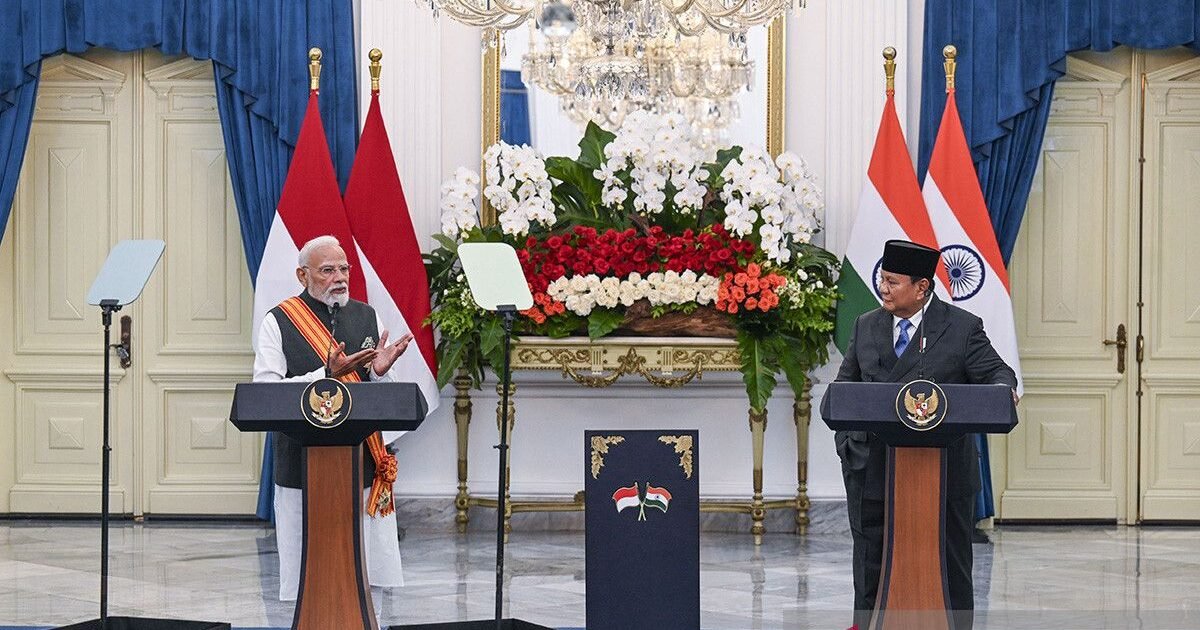
India’s Unified Payments Interface is going to Indonesia. Among the agreements reached during Prime Minister Narendra Modi’s July visit to Jakarta was a commitment to link UPI with the Quick Response Code Indonesia Standard (QRIS), the domestic payments network of Southeast Asia’s largest country — with both sides setting a target to integrate their systems by the end of 2026.
That end-of-year timeline was described as one of the most promising outcomes of the visit for everyday connectivity, according to ANTARA. Once live, the linkage would let Indian travellers pay at Indonesian merchants using their familiar UPI apps and let settlement between the two economies bypass costlier legacy rails.
India’s ambassador to Jakarta, Sandeep Chakravorty, said negotiations on the integration were at an advanced stage and expressed confidence it could be completed within the year. “We hope to conclude the discussions and the technology integration very soon. This is work in progress at a very advanced stage,” he said, adding that both leaders had pressed negotiators to move quickly, as reported by ANI.
Why Indonesia Is a Different Order of Prize
India has been steadily exporting its digital public infrastructure, with UPI linkages already operating with Singapore, the UAE, Sri Lanka, Mauritius, Nepal, Bhutan and France. But Indonesia — a G20 economy of some 280 million people with one of the world’s fastest-growing digital-payments markets — is the largest catch yet. For Jakarta, plugging into UPI offers access to proven, low-cost, interoperable technology without dependence on Western card networks or Chinese super-apps. For New Delhi, every international corridor deepens the network effects of India’s fintech stack and strengthens its pitch that Digital Public Infrastructure is its signature export to the Global South.
The scale of what India is exporting is itself part of the pitch. UPI now processes well over half of the world’s real-time digital payment transactions, handling billions of transactions a month domestically — a volume that gives the system credibility no rival emerging-market payments network can match. Modi framed the Jakarta agreements as the opening of something larger, telling the joint press statement that “today marks the beginning of a golden new chapter in the India–Indonesia partnership,” according to the Prime Minister’s Office — and digital connectivity, reaching ordinary citizens rather than governments, is among the most visible ways that chapter will be felt.
Part of a Deliberate Design
The payments link was not a stray announcement. It sat within Modi’s proposed “Ganga-Mahakam Vision” for the relationship, in which digital public infrastructure featured as an explicit pillar. Addressing the Indonesian Parliament, Modi called for deeper collaboration in “trade, investment, connectivity, food and energy security, digital public infrastructure, and emerging technologies,” the MEA said — placing payments interoperability alongside defence and minerals as a strategic, not merely commercial, objective.
The Competitive Subtext
Cross-border digital rails create everyday interdependence — millions of small transactions that accumulate into commercial gravity, and that are hard to unwind once entrenched. There is a contest beneath the convenience: China’s payment giants have spent a decade building footholds across Southeast Asia, and UPI’s arrival gives Indonesia and the wider region a credible alternative built on open, interoperable standards. Indonesia’s own leadership has signalled it wants a stake in that technology rather than mere access to it; President Prabowo Subianto said the two countries were “committed to deepening cooperation in capacity building in the field of new technology, transnational crime mitigation, and the development of digital infrastructure,” as reported by ANTARA — placing digital rails in the same strategic basket as security cooperation.
What Comes Next
Implementation is where such agreements are won or lost. Technical integration between the two systems, regulatory alignment and merchant onboarding all take time, and the end-2026 target is ambitious. But the direction is set — and for the growing stream of Indian tourists and businesses heading to Bali and Jakarta, the day they can simply scan and pay in rupees may be closer than they think.