For the fourth time in fourteen years, India is about to take the BRICS chair and host the grouping’s leaders in New Delhi. The BRICS Summit 2026 is scheduled for September 12 and 13, and it arrives at one of the most combustible moments in recent geopolitics, with wars grinding on in Ukraine and West Asia, trade blocs fracturing, and the world’s largest powers openly jostling for advantage.
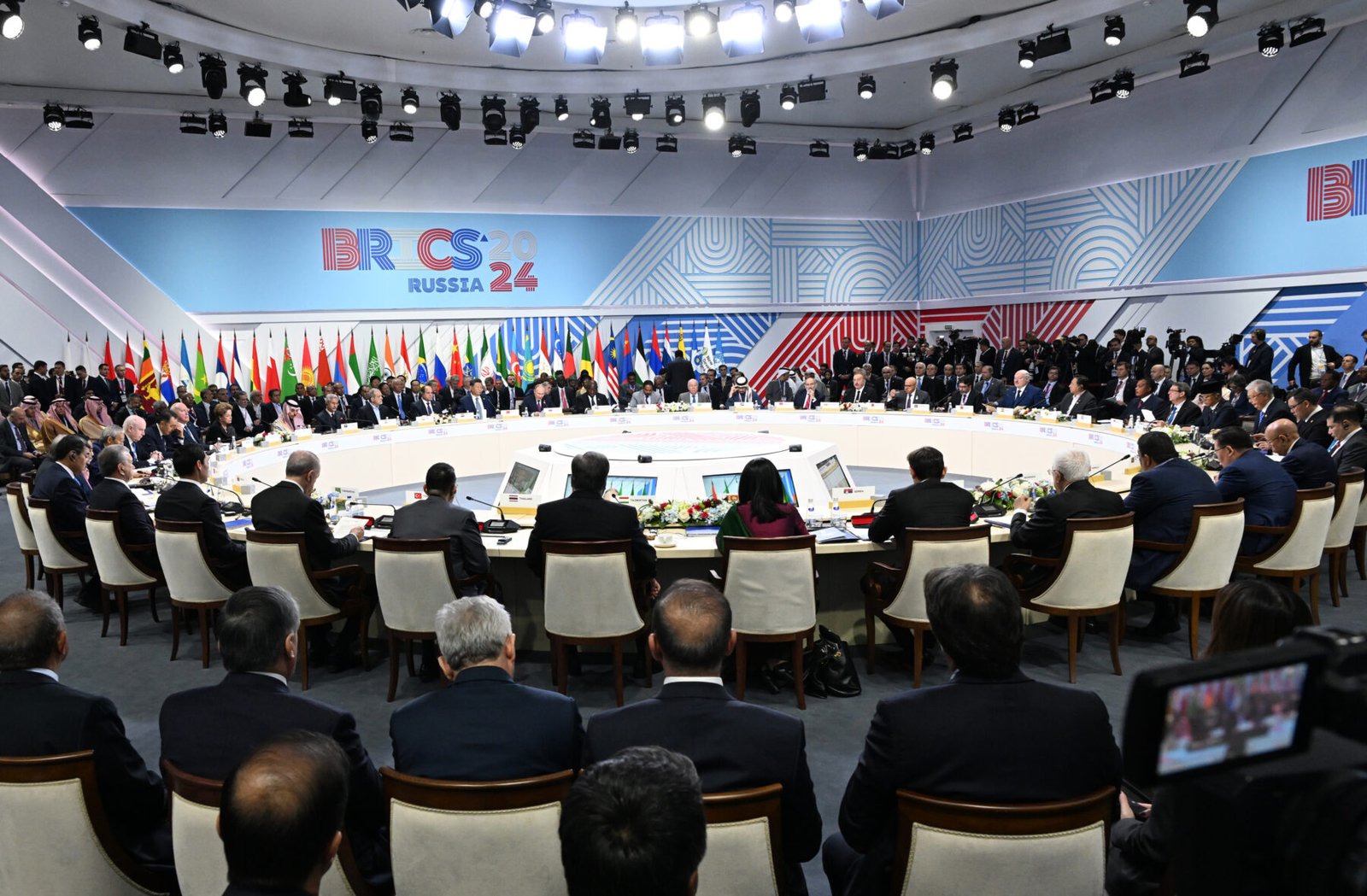
What makes this edition stand out is not just the venue. It is the room. Prime Minister Narendra Modi is set to welcome Chinese President Xi Jinping and Russian President Vladimir Putin to the same table, days after India spent much of the year quietly stitching together an agenda designed to speak for the Global South. Here is what the summit is, who is attending, and why it carries more weight than the usual diplomatic photo-op.
What is the BRICS Summit 2026 and when is it?
BRICS began in 2009 as a four-country club of Brazil, Russia, India and China, with South Africa joining a year later to complete the acronym. In 2024 the bloc expanded dramatically, taking in Egypt, Ethiopia, Iran and the United Arab Emirates, followed by Indonesia. That expansion turned a compact coordination forum into one of the largest political and economic groupings on the planet, covering close to half of humanity and a rising share of global output.
India holds the rotating chairmanship for the calendar year 2026 and hosts the leaders’ summit in New Delhi on September 12 and 13. The working theme New Delhi chose, “Building for Resilience, Innovation, Cooperation and Sustainability,” is a deliberate echo of Modi’s humanity-first framing from the 2025 Rio summit. Behind the slogan sits a year of unglamorous groundwork: sherpa meetings, a foreign ministers’ gathering at Bharat Mandapam in May, and dozens of working-group sessions on everything from public health to cross-border payments. It is also India’s return to the host’s chair after five years.
Who is coming to New Delhi?
The headline is the guest list. The Kremlin has formally confirmed that Putin will attend, which alone guarantees the summit global attention given the Russian president’s constrained travel schedule. Xi Jinping is expected, setting up the prospect of Modi, Xi and Putin sharing a stage at a time when each is managing a delicate relationship with Washington. Iranian President Masoud Pezeshkian is also anticipated, alongside leaders from the newer member states and a widening list of partner countries.
For India, hosting Xi is loaded. The two countries spent years locked in a military standoff along their contested Himalayan frontier, and the slow, wary normalisation of ties has been one of the quieter stories of the past year. A face-to-face meeting on Indian soil, on India’s terms, is exactly the kind of controlled engagement New Delhi prefers over dramatic breakthroughs.
India in the chair: a fourth turn, and a familiar playbook
This is India’s fourth BRICS presidency, and the pattern across the earlier three is instructive. In 2012, New Delhi hosted the fourth summit and pushed the idea that eventually became the New Development Bank, the group’s own answer to Western-led lenders. In 2016, the Goa summit leaned into counter-terrorism language and connectivity. In 2021, chairing a virtual summit during the pandemic, India steered the group toward a counter-terrorism action plan and a push on digital public goods.
The through-line is that India tends to use BRICS less as an anti-Western battering ram and more as a platform for institution-building and development delivery. That distinction matters, because it is precisely where India diverges from some of its partners. New Delhi wants reform of the global order, not its demolition, and it has spent the year drafting outcomes that emerging economies of every stripe can sign.
The de-dollarisation question
One theme will attract more attention than India might like. Expect a push for more trade settled in local currencies, which reduces the bloc’s exposure to a single reserve currency. India has been careful to frame this as diversification rather than the aggressive de-dollarisation rhetoric favoured by some members, a line that spooks Washington and has drawn tariff threats. A new BRICS cross-border payment system has also been under discussion, though its success depends on member central banks actually cooperating on technical standards, which has historically been the slow part of every such plan.
What is actually on the agenda?
Strip away the ceremony and a few concrete priorities emerge. Beyond finance, the agenda spans reform of institutions such as the United Nations Security Council and the IMF, climate finance for developing economies, technology and digital public infrastructure, and health cooperation, where India has floated new tracks on healthy lifestyles and mental health. The unifying thread is the Global South. India is trying to convert its self-appointed role as the developing world’s spokesman into something with delivery attached, which is why the theme leans on resilience and cooperation rather than confrontation.
The fault lines inside an expanded BRICS
A bigger bloc is a harder bloc to steer, and the summit’s real drama may be internal. The expansion bundled together governments with genuinely incompatible interests. Iran and the UAE, now both members, are regional rivals, which means any joint statement on West Asia has to be drafted with tweezers. China would prefer a sharper anti-Western posture than India is willing to sign. And Russia has an obvious incentive to treat BRICS as a mechanism for blunting Western sanctions, which makes Brazil and India visibly uncomfortable.
Cohesion, in other words, is a structural problem rather than a drafting one. The group now stretches from democratic Brazil and India to authoritarian Russia and clerical Iran. Agreeing common positions on terrorism, human rights or freedom of navigation requires the kind of careful language that produces communiques everyone can live with and no one is thrilled by. India’s task as chair is to keep the tent standing without letting any single member define what BRICS stands for.
Why this matters for India
Hosting a summit of this size is as much about signalling as substance. It lets New Delhi project itself as a convening power, a country that can get Xi, Putin and the leaders of the Global South into one room while simultaneously deepening ties with the United States and Europe. That balancing act, often labelled strategic autonomy, is the defining feature of Indian foreign policy under Modi, and the BRICS chair is a stage built for it.
There is also a hard economic layer. India’s supply chains remain heavily dependent on Chinese intermediate goods in sectors like pharmaceuticals and electronics, and a summit provides quiet space to manage that dependence even as the two governments compete elsewhere. The optics will be about multipolarity and the Global South. The private conversations, as ever, will be about trade, technology and security.
When the leaders gather in Delhi in September, expect a carefully worded declaration, a handful of new initiatives with ambitious names, and a great deal of reading between the lines. For India, the win is less any single deliverable than the demonstration itself. In a fragmenting world, New Delhi is one of the few capitals that can still bring the major players to the table, and set the terms of the conversation.