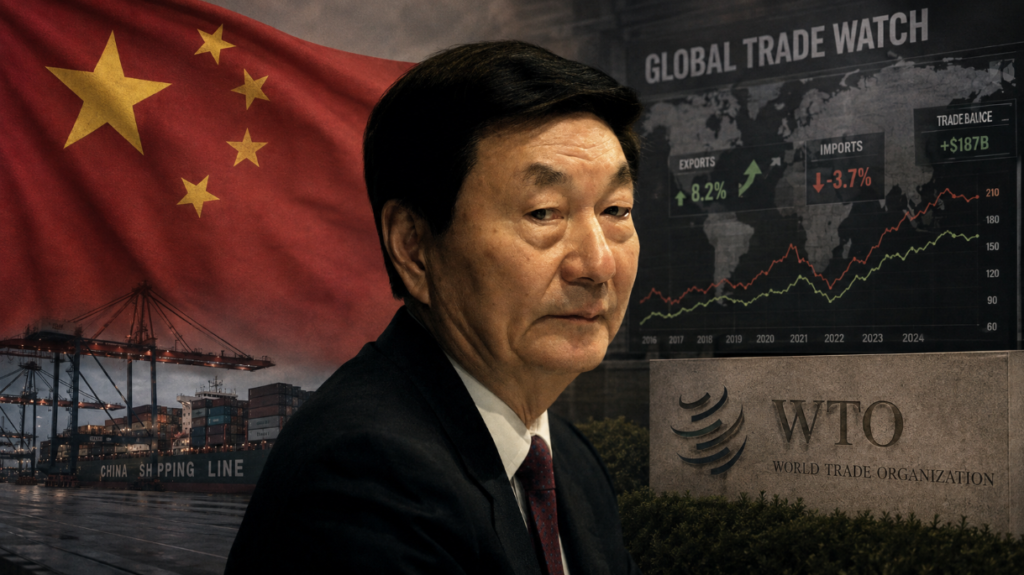
BEIJING — Zhu Rongji, the blunt, engineer-trained premier who pushed China into the World Trade Organization and out of its planned-economy past, died in Beijing on Wednesday at the age of 97, state media said, citing illness. His death draws a line under the reform era that Zhu Rongji did more than almost anyone to build.
He ran China’s economy as premier from 1998 to 2003, under President Jiang Zemin, and as its central planner before that. The reforms he forced through created enormous wealth over the next three decades. They also seeded problems the country is still living with. In China his record remains contested. Abroad, his passing reads as the closing of a chapter.
From rural exile to economic czar
Zhu was born in 1928 in Changsha, in Hunan province, and trained as an electrical engineer at Beijing’s Tsinghua University. His plain speaking cost him early. Labelled a “rightist” in 1958 for criticising Mao Zedong’s economic line, he was later purged during the Cultural Revolution and sent to five years of manual labour. He was rehabilitated after Mao’s death and climbed back with the pragmatism of a man who had learned to solve problems rather than recite slogans.
As central bank governor he tamed the runaway inflation of the early 1990s. As vice-premier he centralised the tax system, a change that fuelled land sales, local revenue and, eventually, unsustainable debt. When the Asian financial crisis swept the region in 1997 and 1998, he held the yuan steady while neighbouring currencies collapsed, a decision that won China lasting credibility with foreign investors.
The cost of the reforms
Appointed premier in 1998, he promised to fix the indebted state banks in two years and the inefficient state firms in three. He vowed to press on whether ahead lay “a minefield or a bottomless abyss.” His most disputed legacy was the overhaul of China’s bloated state-owned enterprises. He shut smaller loss-making firms and left an estimated 30 million state workers suddenly jobless. Protests broke out across the industrial north, and Zhu pressed on. He built a basic welfare net, the dibao, that still exists, and set up asset-management companies to absorb the banks’ bad loans, but parts of the northeast never recovered.
He carried the criticism with gallows humour. During an anti-corruption drive he said he had prepared 100 coffins, “99 for the corrupt officials and one for myself.” Unlike most Communist leaders, he enjoyed sparring with reporters and ad-libbing answers, a rare openness that earned him affection and enemies in equal measure. Deng Xiaoping, who elevated him, once called him a rare talent among cadres who understood economics.
The WTO gamble that remade the world economy
Zhu’s signature achievement was steering China into the WTO. The talks ran six and a half years and required painful concessions, opening a closed economy to foreign firms in exchange for permanent trading status with the United States. A near-deal on his 1999 visit to Washington fell apart when President Bill Clinton hesitated, and collapsed further weeks later when a US bomb hit China’s embassy in Belgrade. Zhu revived it. The trade deal with Washington was signed later that year, the US Senate granted permanent normal trade relations in 2000, and China joined the trade body in December 2001.
The payoff was historic. China became the world’s factory, foreign investment poured in, and growth held above 8% a year through the 2000s, peaking above 14% in 2007. Charlene Barshefsky, the US trade negotiator who sat across from Zhu for years, said he embraced a China whose economy would be more compatible with the West. He represented, she said, “a different time, a different era for China.” The late Henry Kissinger called his agenda “one of the most significant reform programs in modern history.”
The bill for that growth came due later. The bad loans Zhu swept into asset-management companies, the local debt his tax reform encouraged, and the property boom that followed all became burdens his successors are still unwinding. Admirers say he built the runway for China’s take-off. Critics say he also laid the debt and the layoffs that shadow it, and both are right.
He governed with a directness Chinese officials rarely show. He fielded reporters’ questions without a script, dressed down underlings in public, and let cameras record his temper. That openness made him popular at home and legible abroad, a Chinese leader foreign counterparts felt they could actually read. It also made him unusual, and the system that followed him grew far more guarded.
By the time he retired in 2003 he had handed his successors a growing, globally wired economy. What he could not hand them was his instinct for opening. Within a generation the leadership would decide that the risks of that openness outweighed its rewards, and would begin closing doors Zhu had spent his career prying open.
Why his death feels like an ending
That era is over, and not only because Zhu is gone. Under Xi Jinping, China has turned more nationalistic, more state-directed and more closed to the outside world. The instinct Zhu embodied, that integration with global rules served China’s interest, has given way to self-reliance, industrial control and a drive for “common prosperity.” He spent his last years quietly in the western hills of Beijing, listening to Peking opera and, by most accounts, keeping his views on the current leadership to himself.
Abroad, Zhu is remembered as the Chinese leader the West found easiest to deal with. He spoke the language of markets, honoured the deals he signed, and treated foreign investors as partners rather than threats. Barshefsky, who negotiated the WTO terms across the table from him, has said he wanted China to move toward Western-style economics and rules, and believed that opening served his country’s interest rather than threatening it. That is precisely the path Beijing has since stepped back from. It is why the tributes to Zhu carry a note of nostalgia, mourning not only a man but a version of China that chose engagement and has since chosen something else.
What it means for India
The China that Zhu built is the one India now works to counterbalance. The manufacturing colossus born of WTO entry is the reason New Delhi pitches itself as an alternative factory floor through production-linked incentives and a “China plus one” supply-chain shift. As Xi unwinds the openness Zhu championed, and as foreign firms hedge against a more assertive Beijing, that opening tilts India’s way. Zhu’s legacy shaped the contest India is trying to win, and his passing is a reminder of how China rose in the first place.