In under two months, the leaders of the world’s major emerging economies will gather in New Delhi. India hosts the 18th BRICS Summit on September 12-13, 2026 — the centrepiece of its BRICS presidency and one of the biggest diplomatic events on Indian soil in years, convened at a moment when the global order the grouping was built to challenge is visibly fracturing.
Putin Confirmed
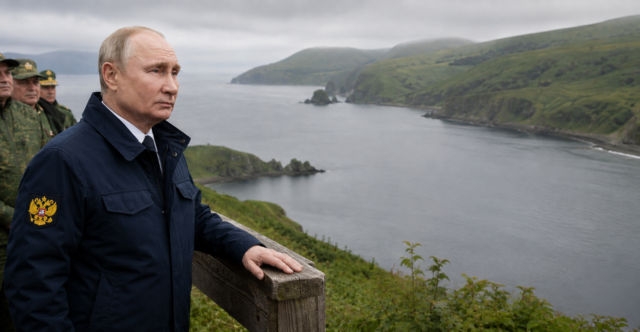
The Kremlin confirmed in May, through aide Yuri Ushakov, that President Vladimir Putin will attend. It will be his second trip to India within a year: he visited New Delhi on December 4-5, 2025, for the 23rd India-Russia Annual Summit — his first visit to India since the Ukraine war began — where he was accorded a ceremonial reception at Rashtrapati Bhavan, laid a wreath at Rajghat, and was hosted at a presidential banquet by President Droupadi Murmu.
The warmth of that December visit set the tone for the return. Standing beside Putin, Modi described the relationship in strikingly personal terms, calling the India-Russia friendship “steadfast like the pole star,” enduring global geopolitical shifts over nearly eight decades, as reported by Business Today. He also framed the partnership through a shared security lens, saying the two countries had “long been standing shoulder to shoulder in the fight against terrorism,” invoking both the Pahalgam attack and Russia’s Crocus City Hall massacre, the same report noted. Putin, for his part, reminded the audience that the two countries had, in 2010, “upgraded our partnership to the level of a special privileged strategic partnership,” crediting a quarter-century of cooperation, according to the Kremlin’s published record of the summit remarks.
Bilateral Modi-Putin talks on the summit’s sidelines are widely expected, watched all the more closely because India committed in its February trade deal with Washington to halt Russian oil purchases — making the management of the Moscow relationship a delicate exercise conducted in full public view. New Delhi has been careful to signal continuity regardless: marking 25 years of the strategic partnership, MEA spokesperson Randhir Jaiswal affirmed that “India and Russia enjoy a special and privileged strategic partnership,” adding that India looked to strengthen “each and every segment” of the relationship, as reported by ANI.
The Agenda
India’s presidency theme is “Building for Resilience, Innovation, Cooperation and Sustainability.” Groundwork has been laid through the year, including a BRICS foreign ministers’ meeting in New Delhi attended by Russia’s Sergei Lavrov, focused on economic cooperation, reform of multilateral institutions and global security.
The expanded BRICS — now including Egypt, Ethiopia, Iran, Saudi Arabia, Indonesia and the UAE alongside the founding five — meets amid extraordinary turbulence. The Iran war and Hormuz crisis directly involve multiple members; Western tariff regimes have jolted developing economies; and calls for alternatives to dollar-dominated payment systems have grown louder, even as India has been careful not to endorse any move toward a common BRICS currency that would antagonise Washington.
Substantively, Indian officials have signalled that the Delhi summit will lean toward the pragmatic rather than the confrontational — prioritising cooperation on trade in local currencies, supply-chain resilience, food and energy security, technology, and reform of institutions such as the UN Security Council and the IMF, where the Global South has long argued it is underweight. The New Development Bank, headquartered in Shanghai and central to the grouping’s economic agenda, is expected to feature prominently as members press for expanded lending in national currencies. The presence of new members with sharply divergent interests — a Gulf monarchy alongside Iran, an Egypt alongside Ethiopia — makes consensus harder to engineer than in the founding-five era, and much of India’s presidency has been spent quietly managing those fault lines ahead of the leaders’ arrival.
India’s Balancing Test
Hosting BRICS while deepening ties with Washington is the tightrope New Delhi has walked for years, now strung at greater height. The summit falls between India’s Quad engagements and its US Bilateral Trade Agreement talks — and with war-torn Iran seated at the table as a member, every communiqué word will be parsed in Washington, Moscow, Beijing and Tehran alike. India’s challenge will be to produce an outcome document substantive enough to justify the summit’s billing without handing its American trade partner a grievance.
For India, the prize is stature: convening the Global South’s premier platform in a year when the old order is cracking. September in Delhi will show whether BRICS can be more than the sum of its contradictions — and whether India can lead it without being defined by it.