By any conventional logic, 2026 should have been the year India-Russia relations finally buckled. India signed a trade deal with Washington whose central concession was halting Russian oil purchases — the very trade that had defined the relationship’s recent economics, and one of the pillars of India’s own strategic autonomy. And yet: Vladimir Putin is coming to Delhi in September, for the second time in ten months. The relationship keeps being written off, and keeps refusing the obituary.
The Evidence of Endurance
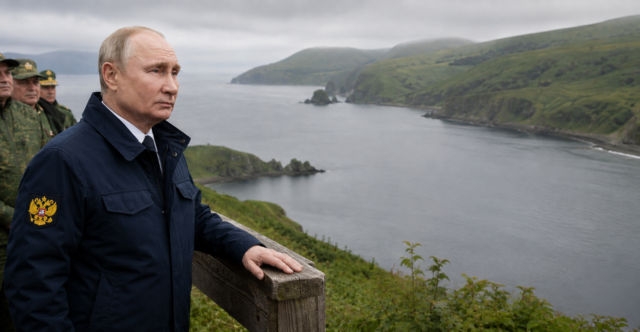
Putin’s December 2025 state visit for the 23rd India-Russia Annual Summit — his first to India since invading Ukraine — produced agreements across trade, energy, healthcare, education, culture and media, complete with ceremonial honours at Rashtrapati Bhavan and a wreath at Rajghat. The symbolism was as pointed as the substance. Modi, standing beside the Russian president, called the India-Russia friendship “steadfast like the pole star,” describing it as enduring nearly eight decades of global upheaval, as reported by Business Today.
Modi also anchored the relationship in a shared security logic, noting that India and Russia had “long been standing shoulder to shoulder in the fight against terrorism,” invoking both the Pahalgam attack and Russia’s Crocus City Hall massacre, the same report said. Putin reciprocated the warmth, reminding the audience that the two nations had, in 2010, “upgraded our partnership to the level of a special privileged strategic partnership,” and praising a quarter-century of cooperation, according to the Kremlin’s published record of the remarks. His confirmed return for the BRICS Summit on September 12-13 signals that the oil rupture, however painful, did not break the architecture.
What Holds It Together
Defence is the deepest root. A significant portion of India’s military equipment is Russian-origin — the S-400 Triumf air-defence system, Sukhoi and MiG fighters, T-90 tanks, and the jointly developed BrahMos missile, which in July 2026 became India’s marquee defence export to Indonesia. Sustainment, spares, upgrades and joint production for this vast installed base guarantee decades of cooperation regardless of the diplomatic weather. You cannot decouple overnight from the supplier of your air defence.
Beyond hardware, the ties span civil nuclear energy — Russia is building reactors at Kudankulam — along with space cooperation on the Gaganyaan human spaceflight programme, and a long habit of diplomatic alignment. Russia has been a reliable UN Security Council friend on issues India cares about, consistently backing India’s bid for a permanent seat, and asks far fewer questions about Indian domestic affairs than Western partners do. Institutional muscle memory — annual summits held almost without fail since 2000, with Modi and Putin having met some twenty times — does the rest.
The New Constraints
None of this erases the strain, which is real and growing. The oil halt removed the relationship’s fastest-growing commercial pillar; discounted Russian crude had, at its peak, supplied a large share of India’s imports and saved billions. Yet even at the height of the tariff dispute over that trade, India refused to disown the relationship. Visiting Moscow as the pressure peaked, Jaishankar told journalists alongside Russian counterparts that “relations between India and Russia have been among the steadiest of the major relationships in the world after the Second World War,” as reported by Deccan Herald — a pointed reaffirmation delivered precisely when Washington expected distance.
Russia’s deepening embrace of China — on conspicuous display during Putin’s visits to Beijing and the two powers’ celebration of their partnership — genuinely unsettles Delhi, which has no interest in a Moscow that functions as a junior partner to its principal Asian rival. And every Russian engagement now carries a Washington-management cost, forcing India to spend diplomatic capital explaining itself in a way it did not a decade ago.
The bilateral trade target of $100 billion by 2030, reaffirmed during the December summit, will be far harder to reach without the oil trade that drove the recent surge past $68 billion. Replacing that volume with other goods — a persistent imbalance skewed heavily toward Russian exports — remains an unsolved problem.
The China Complication
The single greatest strain on the relationship is not American pressure but Chinese proximity. As Western sanctions pushed Moscow toward Beijing, Russia has become progressively more economically dependent on China — as an energy customer, a technology source and a diplomatic partner. For India, whose defining strategic rivalry is with China, a Russia increasingly aligned with Beijing is a genuine problem: it raises the prospect that India’s oldest defence partner and its principal adversary are drifting into the same camp.
New Delhi’s response has been to work the relationship harder rather than abandon it, on the theory that a Russia with strong Indian ties is less likely to become a pure Chinese satellite. Every summit, every defence contract, every reaffirmed partnership is, in part, an effort to keep Moscow’s options open — and by extension, to keep a wedge, however thin, between Russia and China. It is a subtle game, and one India cannot be certain of winning, but the alternative — ceding Moscow entirely to Beijing — is worse. This is also why the revival of the Russia-India-China (RIC) trilateral format, floated intermittently through 2025-26, is watched so carefully: India sees value in a forum that keeps it in the room, even as it deepens Quad ties that point the other way.
The Logic Beneath
India’s persistence with Moscow is not nostalgia; it is portfolio theory applied to statecraft. In a year when the US imposed 50 per cent tariffs before relenting, when Hormuz closed and crude spiked, and when great-power alignments shifted almost monthly, Delhi’s refusal to hold all its eggs in any single basket looks less like fence-sitting and more like the only strategy that survives contact with 2026’s disorder. The doctrine’s whole premise is that no single partner — not Washington, not Moscow, not Beijing — should hold decisive leverage, and that means keeping even a strained relationship in working order.
Russia is not India’s future; the economic gravity of the relationship has shifted, and Delhi knows it. But it remains, stubbornly, part of India’s insurance — a hedge against over-dependence on the West, a guaranteed defence supplier, a UN ally, and a bridge to a multipolar order India believes is coming.
That combination of dependence, habit and strategic calculation is why analysts who have forecast the relationship’s demise for two decades keep being proved wrong. The ties survive not because they are frictionless but because, for India, the cost of severing them — in air-defence readiness, in UN backing, in leverage against both Washington and Beijing — remains higher than the cost of maintaining them under scrutiny. That is why, whatever the pressure, the pole star holds its place.