WASHINGTON — Talks on reopening the Strait of Hormuz to normal shipping are still stuck, five months after a US-Israeli campaign against Iran shut the waterway and upended global oil markets. President Donald Trump keeps saying a deal is close. Iran keeps denying that direct talks are even happening.
What both sides agree on is smaller than what divides them: Iran and Oman are working on a framework that would let some commercial ships through, under a system Tehran describes as new, not a return to how the strait worked before.
How the strait closed in the first place
The current standoff traces back to February 28, when the United States and Israel launched close to 900 strikes on Iran in under 12 hours. The strikes killed Supreme Leader Ali Khamenei along with dozens of officials, and also hit a girls’ school near a naval base at Bandar Abbas, killing about 170 people. Washington said the goal was to end Iran’s nuclear and missile programmes and push regime change.
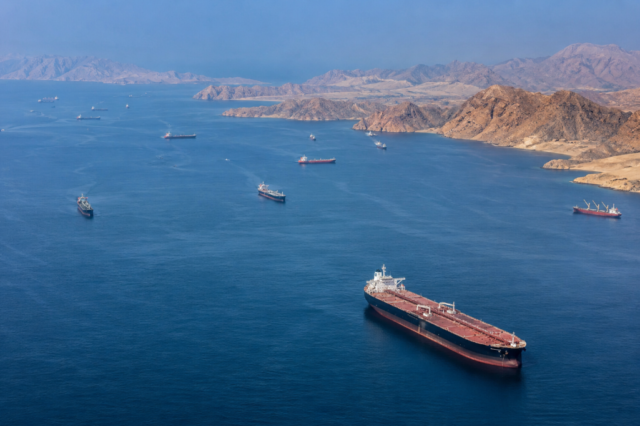
Iran answered by firing on US bases and Israeli cities and by shutting the Strait of Hormuz, the narrow channel between the Persian Gulf and the Gulf of Oman that carries roughly a fifth of the world’s seaborne oil. Iran’s Assembly of Experts named Khamenei’s son, Mojtaba Khamenei, as the new supreme leader on March 8, a little over a week after his father’s death.
Forty days of fighting followed before a Pakistan-mediated ceasefire took hold on April 8. It did not end the crisis at the strait. The US imposed a naval blockade on Iranian shipping from April 13, and struck Iranian targets again on May 7 after Iran fired on US warships. A memorandum of understanding between Washington and Tehran in June cooled things further, but both sides have kept trading limited strikes since, and the strait has stayed shut to normal traffic for five months.
What’s actually on the table
Iran and Oman have now reached agreement on a proposed shipping route, according to Tehran, after more than three weeks of negotiation. Two Middle East diplomats with knowledge of the talks have described it as a framework for a temporary reopening. Neither side has published the terms.
The plan would not restore Hormuz to how it worked before the war. An Iranian official linked to the deal has said it would establish new routes, with commercial vessels entering the Persian Gulf through an Iranian-controlled corridor and exiting through one controlled by Oman.
Foreign Ministry spokesman Esmail Baghaei described the design as deliberately novel. “We are now going to reach an understanding on a route acceptable to both sides — neither the northern route nor the southern route — but one that respects the sovereign rights of both sides and safeguards our national interests and security,” he said on state television.
Foreign Minister Abbas Araghchi, briefing the cabinet, said the negotiations were “on the way to being finalised” and in their final stages, without offering specifics.
An agreement on a route is not the same as an open waterway, and Iranian officials have been careful to say so. Deputy Foreign Minister Kazem Gharibabadi, confirming broad agreement on inbound and outbound routes, also denied that Iran is negotiating with the United States over the strait at all — directly contradicting Trump’s account of events.
Iran’s parliament speaker, Mohammad Bagher Ghalibaf, dismissed Trump’s claims of active negotiations as posturing. “Acknowledge the facts and fulfill your commitments,” he said.
The gap that keeps stalling a deal
Tolls are the sharpest disagreement. Iranian lawmakers have drafted legislation to regulate strait traffic, including penalties for vessels that do not comply, and one of Tehran’s negotiators has said access will come with charges. Oman, which has co-managed the strait with Iran for decades, opposes any toll system. Washington backs Oman’s position.
A US official laid out the American red line in blunt terms. “Any temporary routes will be without any impediments,” the official said, adding that the strait is an international waterway that no single party controls.
That position has Gulf backing. Sultan Al Jaber, the UAE’s industry minister and chief executive of Adnoc, argued earlier in the crisis that the strait is a natural waterway governed by the UN Convention on the Law of the Sea and that partial access is not access at all.
“Let’s be clear: the Strait of Hormuz is not open. Access is being restricted, conditioned and controlled,” he wrote, adding that passage subject to permission and political leverage is “not freedom of navigation. That is coercion.”
Iran’s nuclear programme remains a separate, unresolved thread. Tehran has said its ballistic missile programme is not up for negotiation, and has demanded guarantees against future strikes along with reparations, conditions Washington has not accepted. President Masoud Pezeshkian, who governs alongside Mojtaba Khamenei in Iran’s post-war power structure, has said the pressure from sanctions and war is aimed at breaking public support for his government, a sign Tehran sees the strait talks as connected to its wider survival, not just shipping logistics.
What the closure has cost, in oil terms
The scale of the disruption is why traders watch every signal from Muscat and Washington so closely. The International Energy Agency has called the closure the largest supply disruption in the history of the global oil market, with about a fifth of the world’s seaborne oil and a similar share of liquefied natural gas exports blocked at the strait’s narrowest point. Brent crude has traded well above pre-war levels through the year, and gasoline prices in the United States remain elevated enough that Trump has publicly tied a full reopening to the price at the pump, predicting it could fall toward two and a half dollars a gallon if the strait opens without friction.
Trump’s shifting timeline
Trump has predicted an imminent deal several times over the past two weeks, only to walk the timeline back each time. “We’re talking, let’s see what happens,” he told reporters this week, a notably more cautious tone than his earlier promise that an announcement could land within a day or two.
The president has also had to answer questions about US munitions stockpiles after reports suggested shortages following months of strikes. He has denied any shortfall and said he remains satisfied with Defense Secretary Pete Hegseth’s handling of the campaign.
The wider region is still on edge
The standoff at the strait sits inside a bigger regional flashpoint. Saudi Arabia is bracing for what a Saudi official described to CNN as coordinated attacks by Iraqi militias working with Iran-backed Houthi rebels, after Yemen’s Houthi movement said it had carried out a large-scale operation against Saudi forces. Separately, US-mediated talks between Israel and Lebanon in Rome wrapped up this week, which a State Department spokesperson called productive on the technical level, even as Israel kept striking targets in southern Lebanon.
Shipping data offers a small sign of movement. Tracking service MarineTraffic showed at least seven commercial vessels passing through the strait over one recent 24-hour window, evidence that some traffic is already finding a way through even without a formal agreement.
What it means for India
India buys close to 88 percent of the crude oil it uses from abroad, and the strait’s closure hit that dependence hard. Before the war, close to half of India’s crude imports and up to 90 percent of its LPG imports moved through Hormuz. Refiners have since rerouted roughly 70 percent of crude purchases away from the strait, leaning harder on Russia, the United States and West Africa.
That shift has come at a cost. India’s crude import bill rose more than 60 percent year-on-year in the April-June quarter even as import volumes slipped slightly, petroleum ministry data show, because oil bought outside the strait has cost more. LNG and LPG shipments have proven harder to reroute than crude, since fewer alternative suppliers can match the volumes the Gulf provides on short notice. The Indian Navy has kept ships in the Arabian Sea under Operation Sankalp to escort Indian-flagged tankers through the period, and the petroleum ministry has kept a round-the-clock control room tracking stocks of petrol, diesel and jet fuel since the closure began.
A working, even partial, reopening would ease that price pressure. Until Washington, Tehran and Oman settle the argument over tolls, Indian refiners will keep paying a premium for oil that used to be cheaper to bring home.